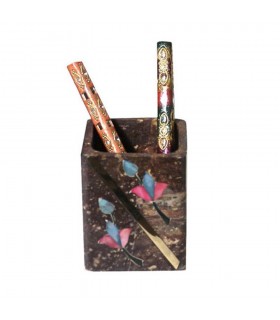
In Jaima Alkauzar you can Buy Online Pencil Holder - Velvet Artisan Trunkthe best price.
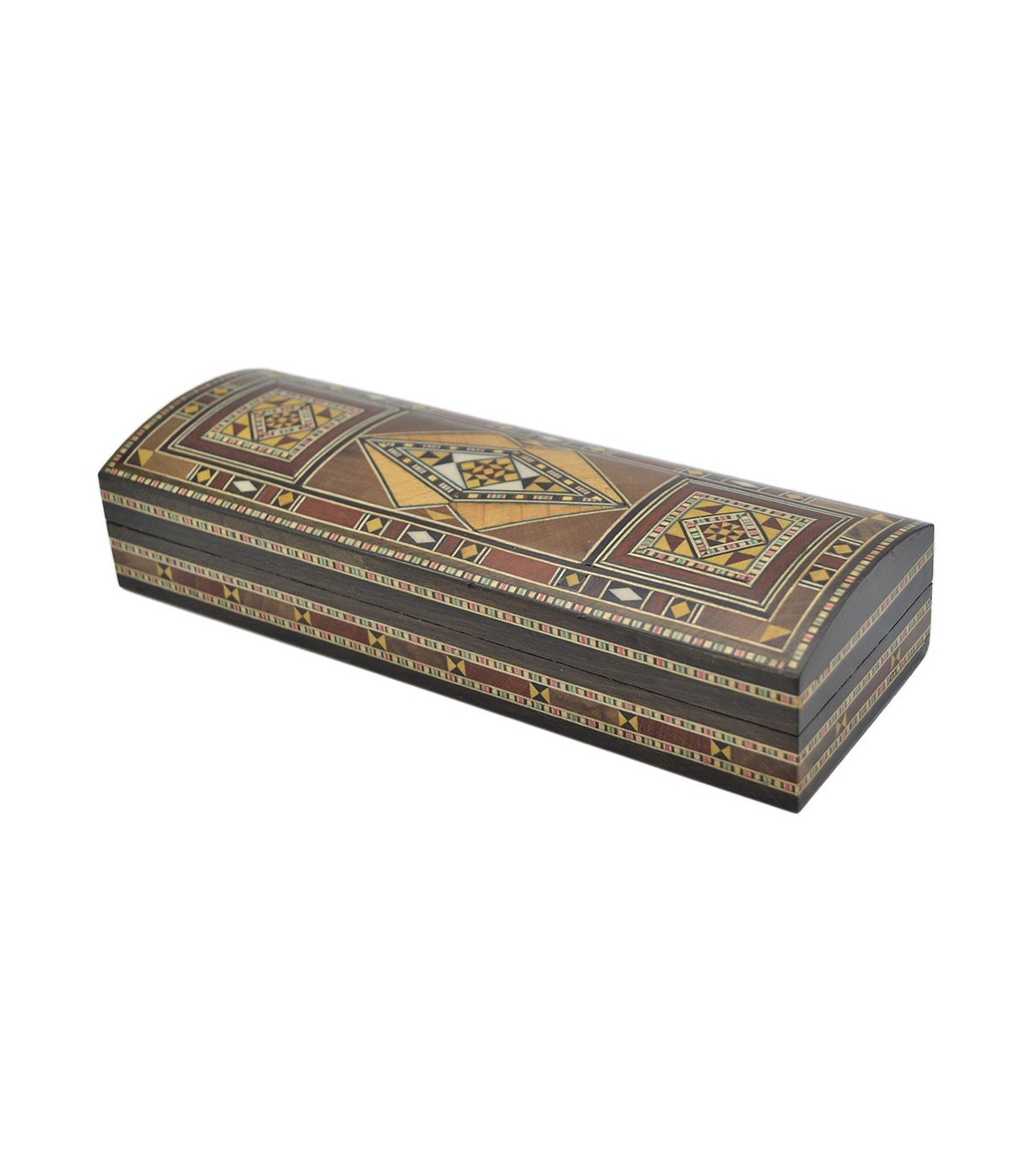
This product has been made using the artisanal technique of inlay in Syria, one of the few places where this technique still exists.
Finished and inlaid with luxury drawings. Very pretty
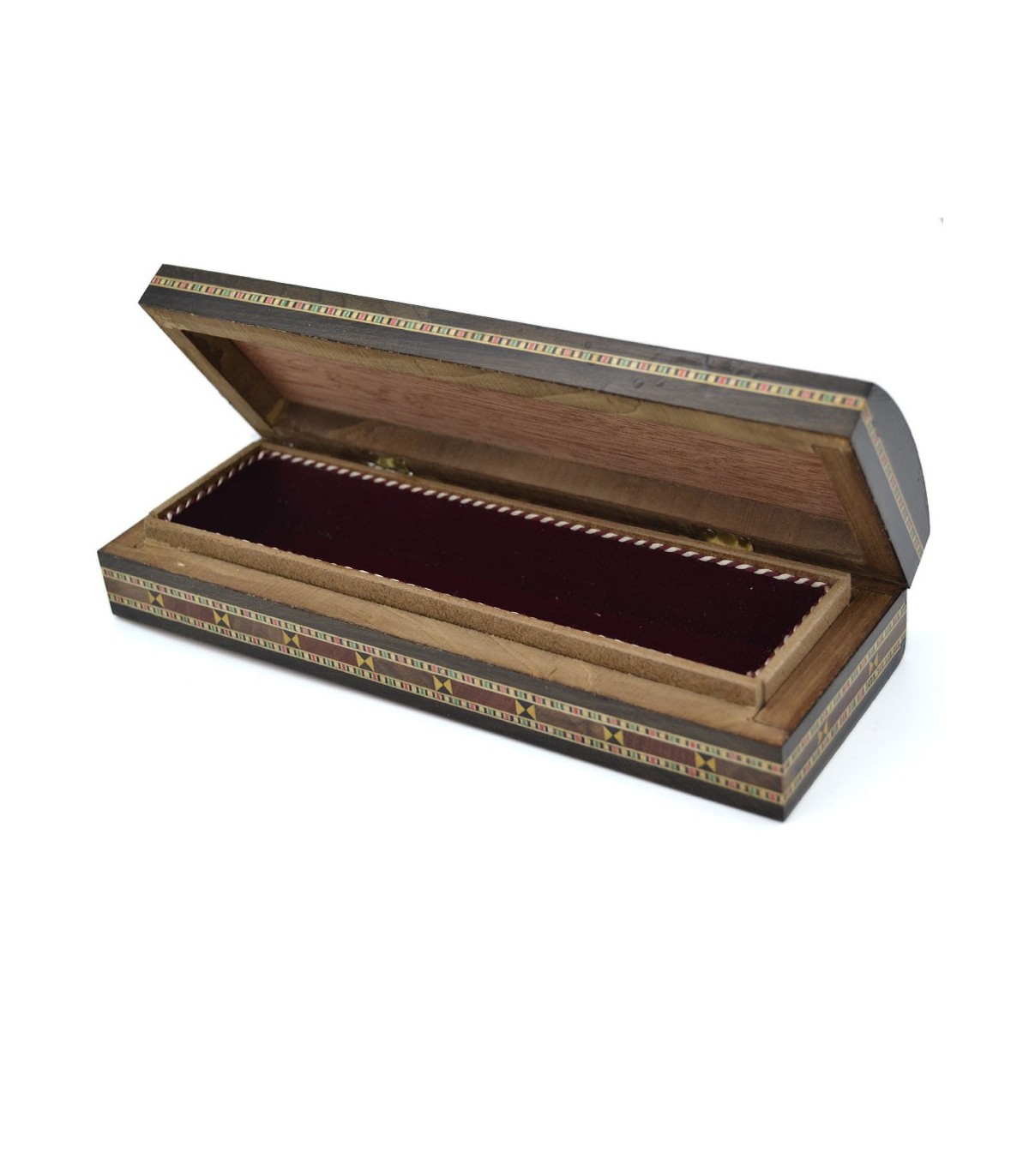
The base is made of Walnut wood, it is lined inside in velvet and the inlays are:
- mother-of-pearl
- Rosewood
- Olive Wood
- Lemon Stick
- Pine Stick
It has a varnish finish.
Measures:22x8x5cm
Taracea is an artisan technique applied to the coating of floors, walls, furniture, sculptures and artistic objects. In the work, pieces cut from different materials (stone, marble, wood, metal...) are used, which are fitted into a support until the decorative design is made. It's an embedding job. Between some pieces and others there is a contrast effect that depends on the color and the characteristics of the material used.
In the marquetry, the base bed between one piece and another inlaid is not seen, as it happens with the mosaic. The material to be embedded in the shape of the design is cut, placed on the surface or support and the outline is drawn. Once embodied andThe drawing on the support is slightly emptied, leaving a hole where the inlay will be embedded; then the whole is smoothed and flattened so that the surface is flush.
There is news of inlay work from the Sumerian era in Mesopotamia (3000 years BC) and from the Ming dynasty (1368-1644) in China. It spread throughout Asia Minor (now Turkey) and was later adopted by the Romans when they came into contact with the Hellenistic world. They called this art incrustatio or loricatito. Pliny the Elder makes an extensive description of this technique in his work Naturalis historia. The pieces with which the inlays were made are called crustae. The Arabs introduced this technique in Spain, which is why marquetry derives from the Arabic word Tar'sia, which means inlay.
Today this technique endures in Damascus and Granada.
Read moreShow less





 English
 Español
 Português PT
 Français
 Deutsch
 Italiano